Harbor Tours on Long Island's Only Non-polluting Electric powered passenger vessel
Glory Going Green
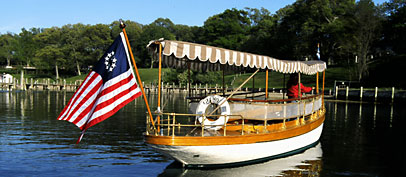
Glory Going Green, Inc., a charitable 501c-3, provides free educational programs to youngsters on the North Fork of Long Island. As the only solar-powered electric launch in New York State certified by the United States Coast Guard, GLORY serves as a floating classroom that fosters an integrated curriculum of art, writing, and science education, especially in the areas of conservation and renewable energy. Our objective is to raise awareness of the importance of Peconic Bay, as both a place of natural beauty and as an economic engine for the well being of the community.
New! Glory Going Green Nature Journal Program
In response to the fabulous turnout we had with the fifth graders all winter for our art and science program, held at the Little Red School house, we have decided to start an 8 week summer "Nature Journal" program aboard Glory. Open to the children of Greenport, we will take the kids out every Thursday morning from 10 to 11 and supply them with journals so they can record the changing season. This program is designed for the fifth and sixth graders of Greenport and was organized by Ms. Dianne Eissler. We have 10 children already committed to this exciting project. This is just another way we are trying to serve the community. All Glory programs are free to the children. ALWAYS.
Glory Going Green Science Program
The 3-day science program is open to the 5th graders of Greenport Elementary School and introduces them to the ecology of Peconic Bay while aboard GLORY.
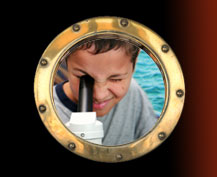
With a science instructor and an educator from the school, we depart Preston's Dock at 9 am for a 2-hour science workshop on Peconic Bay aboard GLORY. Equipped with microscopes and testing material to do basic testing of water quality, the children, many of them for the first time, have the opportunity to be aboard a boat and learn about the life of the bay.
Glory Going Green Storybook Program
In cooperation with the North Fork libraries, Glory Going Green offers a free 2-hour workshop for young writers and artists. Students spend the morning sketching and writing aboard GLORY in preparation for producing individual books on a subject related to Peconic Bay. A show and reading are held at Floyd Memorial Library in late August.
Glory Going Green Art, Science, and Writing Program
Since October 2012, Glory Going Green has sponsored free weekly art, science, and writing classes for the 4th and 5th graders of the Greenport Elementary School. With the cooperation of Greenport Village, which lets us use the 1840 Schoolhouse, the kids gather from 9-11 on Saturday mornings to learn, eat snacks, and have fun. All materials and instruction are provided at no cost to the children.
GLORY is the only zero-emissions, electric powered, “Completely Green” commercial vessel operating under the aegis of the United States Coast Guard in all of New York State. She is a true Eco-tour vessel home ported in Greenport NY. Her skipper, Captain David Berson has operated GLORY out of Greenport since 1999. Captain Berson is dedicated to the preservation of the East End’s marine environment and has spent more than 30 years as a mariner and maritime education instructor.
Did You Know?
Peconic Bay is a body of water that separates the North Fork from the South Fork in eastern Long Island. Commencing to the west at Riverhead, Peconic Bay stretches all the way past Greenport into Orient Harbor, ending at the beginning of Gardiner's Bay about where BUG Light stands. Peconic Bay is brackish water which means that it is a mixture of fresh water coming from the Peconic River and other sources of fresh water to the west, and salt water coming in from the Atlantic Ocean to the east environment that is perfect for a diversity of life that includes the famous Tectonic Bay scallops, oysters, hard shell clams, bluefish stripped bass and other examples of marina fauna.